
Speyside Part 7: The People and the Grain: The Human Story Behind Speyside Whisky
Part 7 of 12 — Speyside Series
Every article in this series has explored what Speyside produces. This one is about who produces it, and what growing up, living and working inside Scotland’s whisky heartland actually means.
The water, the stills, the casks and the warehouses have all been examined in detail. But behind every distillery in Speyside is a community that built its entire identity around whisky. Behind every cask is a chain of human decisions, made by farmers, maltsters, distillers, coopers and warehousemen, many of whom inherited their craft from a parent or grandparent who worked the same distillery floor decades before them.
Speyside whisky is not simply a product of geography and chemistry. It is a product of people.
The Towns That Whisky Built
Drive through the Speyside region and you are driving through a landscape shaped almost entirely by a single industry.
Dufftown, a small town in the heart of Speyside established in 1817 by James Duff, the fourth Earl of Fife, sits at the confluence of the rivers Dullan and Fiddich and is surrounded by more whisky distilleries per square mile than almost anywhere else on earth. The town’s most famous expression of this identity is captured in a local saying repeated across the region for generations: Rome was built on seven hills, Dufftown was built on seven stills. Today the count has grown beyond seven, but the sentiment holds. Seven active distilleries serve a town of fewer than 1,700 people. That is one distillery for every 240 residents. No other town on earth comes close to that ratio.
In Dufftown, whisky is not something you discover. It is something you are born into. The language of casks, stills and maturation is as natural to a Dufftown childhood as the landscape surrounding it. Generations of families have worked the same distillery floors, passed the same craft knowledge down across decades and built a community whose identity is inseparable from the whisky it produces. Elsewhere in the world, whisky is something people learn about. In Speyside, it is something people simply know.
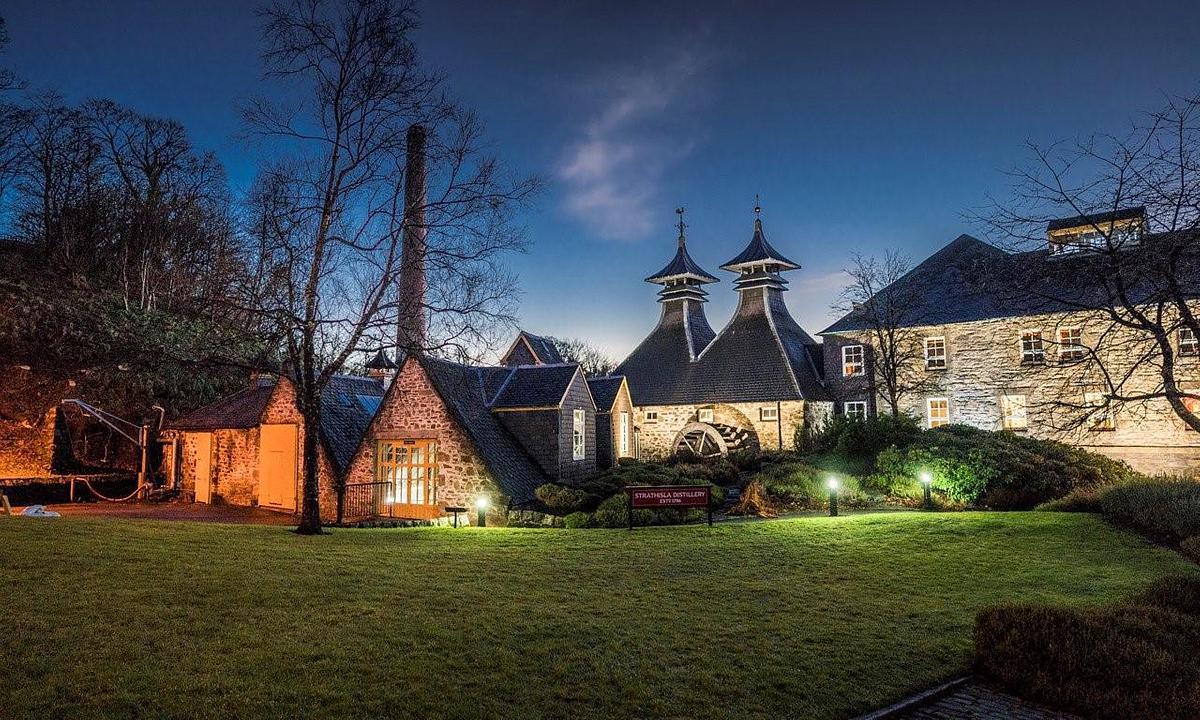
The whisky industry is not merely present in these communities. It is the primary employer, the economic anchor and the cultural backbone of towns that would not exist in their current form without it. Rothes, a few miles to the northeast, is home to five distilleries within its boundaries for a population of just over a thousand people. Keith, on the eastern edge of Speyside, is home to Strathisla, the oldest continuously operating distillery in the Scottish Highlands, with origins dating to 1786. For Keith, as for Dufftown and Rothes, the distillery is not simply a factory on the edge of town. It is the reason the town exists at all.
Facts That Most People Outside Speyside Do Not Know
The depth of Speyside’s connection to whisky production produces some facts that are genuinely difficult to believe until you have visited the region.
At the height of Speyside’s production boom in the late nineteenth century, approximately one in three working adults in the region was directly employed by the whisky industry. The distillery was not simply an employer. It was the social infrastructure of the community, providing housing, heating fuel and in some cases medical care for workers and their families. The distillery manager was often among the most powerful figures in a town, his decisions affecting not just production but the daily lives of everyone connected to the enterprise.
The Temperance Movement of the late nineteenth and early twentieth century posed an existential threat to Speyside’s communities. Towns whose entire economic existence depended on whisky production faced genuine uncertainty during this period. Speyside survived and ultimately thrived through that era largely because the quality of its whisky had already established loyal export markets beyond the reach of domestic temperance politics. It was the region’s global reputation, built on quality rather than proximity, that saved it.
The Families Behind the Distilleries
Some of Speyside’s most celebrated distilleries have remained in family hands for generations, and the continuity this produces is something the industry values deeply and the market has consistently rewarded.
Glenfarclas is perhaps the most striking example. The Grant family has owned and operated the distillery since 1865, making it one of the longest continuously family-owned distilleries in Scotland. The current Chairman, John Grant, is the sixth generation of his family to run the distillery. His grandfather’s grandfather bought it. Six generations of the same family have made decisions about production, cask selection and whisky style across a period that spans two world wars, the consolidation of the Scotch whisky industry under large corporate ownership and the emergence of the global single malt market.
That continuity produces something tangible in the whisky itself. When the same family makes the same decisions about the same distillery across six generations, the accumulated institutional knowledge becomes extraordinarily deep. The current generation knows not only how their whisky behaves today but how it behaved when their great-grandparents were making it. That depth of knowledge is genuinely rare in any industry and almost impossible to replicate once it has been broken.
William Grant and Sons, the family behind Glenfiddich and Balvenie, represents a different scale of family ownership but a similarly deep commitment to continuity. Founded in 1887 and still privately held, the company has resisted the consolidation that absorbed many of its contemporaries into large multinational groups. The decisions made at Glenfiddich today are still made within a family ownership structure that traces directly back to William Grant building his distillery by hand.
The still house at Glenfiddich, Dufftown. William Grant and Sons has remained family owned and independent since 1887.
For the whisky community, family ownership matters because it changes the timescale on which decisions are made. A family distillery invests in quality and consistency across generations. A publicly listed company answers to quarterly results. The difference in that timescale is visible in the whisky, and the market has long understood this.
The Craft That Passes Between Generations
The human story of Speyside is not only about owners and families. It is about the workers whose craft defines what happens inside the distillery every single day.
The distiller who manages the still run, reading the character of the spirit as it comes off the copper and making the cut between foreshots, heart and feints, is exercising a skill that cannot be fully codified or automated. It lives in the hands and the nose of the person who has spent years learning to read the still. Many of the distillers working in Speyside today learned their craft from someone who learned it from someone else, a chain of sensory knowledge passing down across decades of daily practice.
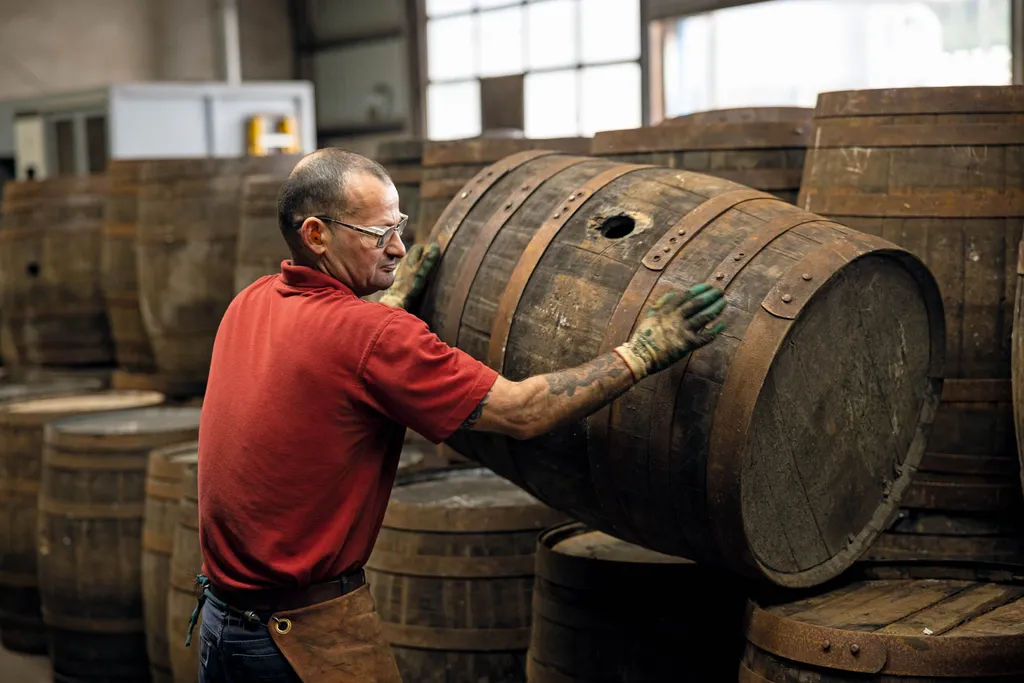
The same is true of the warehouseman who samples casks, assesses their progress and decides which ones need more time and which are ready. Of the maltster who reads the germinating barley and knows when modification is complete. Of the cooper who repairs a leaking cask with the same techniques used in the same region two hundred years ago.
The Grain That Started Everything
Before the water. Before the still. Before the cask. There is the barley.
Scotch whisky begins with malted barley, and the numbers that surround barley’s role in the Scottish economy are remarkable. Scotland grows approximately 1.5 million tonnes of barley annually. The Scotch whisky industry consumes roughly 500,000 tonnes of that total, making it the single largest buyer of Scottish barley in the world. One third of everything Scotland’s farmers grow in barley goes directly into Scotch whisky production. The agricultural economy of northeast Scotland, including the farmland surrounding Speyside, is meaningfully shaped by the whisky industry’s appetite for grain.
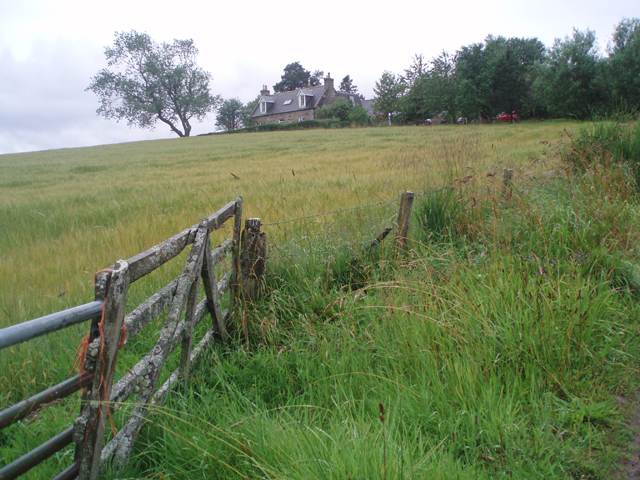
Different barley varieties produce different levels of fermentable sugar per tonne, affecting both the efficiency of production and the subtle character of the new make spirit. The relationship between barley variety and flavour is genuinely complex and not fully understood even within the industry, but it is taken seriously enough that distilleries make deliberate choices about which varieties they use and why.
Golden Promise, a Scottish barley variety widely used by Speyside distilleries through the 1970s and 1980s, became closely associated with the era’s most celebrated expressions. The Macallan used it exclusively for decades, and many of those expressions now command significant premiums at auction, giving the barley variety itself a kind of retrospective collector status that no one anticipated at the time.
Today, the Scotch whisky industry has moved predominantly toward modern high-yielding barley varieties specifically developed and approved for distilling use. Concerto, widely adopted from the mid-2000s, and Laureate, increasingly dominant in more recent years, are the most significant of these. Both are selected for their ability to produce higher volumes of alcohol per tonne of grain. A modern variety such as Laureate can yield approximately 415 to 420 litres of pure alcohol per tonne of barley, compared to Golden Promise’s 385 to 390 litres per tonne.
People, Grain and Place
Speyside’s identity as the world’s premier whisky region was not built by geography alone. It was built by the people who farmed its land, worked its distilleries and passed their knowledge down across generations. By the families who owned those distilleries and made decisions on a timescale that corporate ownership rarely allows. By the agricultural tradition that produced the grain from which the whisky begins.
The water, the stills, the casks and the warehouses are the infrastructure of Speyside whisky. The people and the grain are its foundation.
When the whisky community reaches for a Speyside expression, they are reaching for the accumulated decisions of farmers, distillers, coopers, warehousemen and families whose connection to this place runs deeper than any specification sheet or cask number can capture.
That is what makes it Speyside.
This article is part of an ongoing editorial series produced by Whisky Cask Club, exploring the history, craft and market dynamics of Speyside whisky.
— Jason Chong
Director of Business Development, Whisky Cask Club
This material is intended for informational purposes only and does not constitute financial, investment or legal advice. Cask investment carries risk, including the risk of partial or total loss of capital. Past performance is not indicative of future results. This content is directed at accredited investors and sophisticated persons only.


