
Speyside Part 2: The Distilleries That Built the Region
Part 2 of 12 — Speyside Series
In Part 1 of this series, we explored the geography, the production science and the climate conditions that gave Speyside its distinctive character. We established that Speyside did not become the world’s most recognised whisky region by accident. But geography and craft alone do not build a global reputation. People do.
A region is only as credible as the distilleries within it.
Speyside’s reputation was not built by geography alone. It was built by individual distilleries that made decisions, sometimes bold, sometimes quiet, that compounded over generations into something the rest of the whisky world had to pay attention to.
Some of those decisions were about survival. Some were about craft. A few were about vision that took decades to prove correct.
What follows is not a complete map of Speyside. It is a line through history, tracing the distilleries that did the most to put this region on the world’s radar, and what each of them actually built.
The Glenlivet: The Distillery That Gave Speyside Its Legal Identity
Before 1823, most whisky production in the Scottish Highlands operated outside the law.
Illicit distilling was not a fringe activity. It was an industry. Hundreds of small stills operated across the glens, producing whisky that found its way into local markets and beyond, largely out of reach of the Crown’s excise collectors. The Highlands, and Speyside in particular, had the geography, the water and the grain to produce whisky in volume. They also had enough remoteness to do it quietly.
That changed with the Excise Act of 1823, passed by the British Parliament at the urging of the Duke of Gordon, one of the largest landowners in the Highlands, who argued before Parliament that suppression alone would never eliminate illicit distilling. The solution, he argued, was to make legal production commercially viable. The Act that followed reduced duties significantly and set a flat licence fee of £10 per still. For the first time, a distiller could produce whisky legally and turn a profit doing so.
George Smith of Glenlivet was among the very first to take the government up on its offer, obtaining one of the earliest licences under the new Act in 1824. The decision placed him in genuine personal danger. His neighbours, many of whom operated illicit stills and viewed legal production as a threat to their livelihoods and a betrayal of Highland tradition, made their hostility known. Smith carried pistols for protection during those early years, a detail recorded in contemporary accounts and whisky histories alike.
The significance of what Smith did extends well beyond personal courage.
By producing legally under his own name, Smith demonstrated that Highland whisky could meet a commercial standard rigorous enough to satisfy regulated markets. His whisky found buyers in Edinburgh and London at a time when Southern consumers regarded Highland spirit with deep suspicion. The quality was undeniable. Demand followed.
Within decades, the name Glenlivet had become so synonymous with quality Speyside whisky that distilleries across the region began attaching it to their own names, Longmorn-Glenlivet, Macallan-Glenlivet, Glenfarclas-Glenlivet, borrowing its reputation to lend credibility to their own products. A legal ruling in the 1880s eventually granted The Glenlivet exclusive right to the standalone name, with others permitted only to use it as a hyphenated suffix.
A name so widely borrowed that it required legal protection is a name that had already won.
The Glenlivet did not simply become a successful distillery. It provided the proof of concept that made an entire legal industry possible. Without George Smith’s decision in 1824, the regulated Speyside that followed might have taken another generation to emerge.
The Beating Heart of the Blending Industry
Before single malts became a global conversation, Speyside was already shaping the world’s most recognised Scotch whisky brands from behind the scenes.
Most drinkers do not realise how much of what they have already consumed came from Speyside without their knowledge. Speyside malts form the backbone of many of the world’s most recognised Scotch blends. Chivas Regal draws significantly from Strathisla, one of the oldest continuously operating distilleries in Scotland, with origins dating to 1786, located in Keith on the eastern edge of Speyside. Johnnie Walker, the world’s best-selling Scotch whisky brand, has long relied on Speyside malts including Cardhu as a key component of its blends. Bell’s, Famous Grouse and Grant’s are widely understood to draw on Speyside malts as a significant component of their recipes.
The region’s signature elegance and approachability made its malts ideal blending material, smoothing rougher Highland or Island spirits into something more consistent and palatable for mass markets. Speyside did not merely supply the blending industry. In many respects it defined what a well-constructed blend should taste like.
It was against this backdrop that one Speyside distillery made a decision that would change the industry entirely.
Glenfiddich: The Distillery That Invented the Single Malt Category
For most of the twentieth century, the idea of a single distillery’s whisky being sold as a premium product in its own right, under its own name, to consumers around the world, did not exist in any meaningful commercial sense.
Whisky was blended. That was the industry model.
Distilleries produced spirit which was purchased by blending houses, who combined malt whisky from multiple distilleries with grain whisky and sold the result under proprietary brand names. Johnnie Walker, Chivas Regal, Dewar’s, Bell’s. These were the names consumers knew. The distilleries behind them were largely invisible. A bottle on a shelf carried the blender’s name, not the distillery’s. The craft, the character and the provenance of the individual spirit were entirely hidden from the person drinking it.
It was William Grant and Sons who broke that model.
Glenfiddich was founded on Christmas Day 1887, after William Grant spent a year building the distillery by hand alongside his sons and a single hired mason. Grant’s ambition was straightforward: to produce the best dram in the valley. For decades after his death, Glenfiddich continued as a conventional producer, its spirit flowing into the blending market like most of its Speyside neighbours.
Then in 1963, the Grant family made a decision with no clear precedent in the Scotch whisky industry.
They began actively marketing Glenfiddich as a standalone single malt whisky, bottled under the distillery’s own name, targeted directly at export markets. Sales representatives travelled to the United States and Europe with a product that most consumers had no framework to understand. What is a single malt? Why does it matter which distillery made it? Why should I pay more for one distillery’s whisky than for a blend?
Glenfiddich answered those questions not with explanation alone but with sustained investment in brand building, export infrastructure and consistency of product over decades. They were not the first distillery to ever bottle their own spirit. Independent bottlers such as Gordon and MacPhail had been bottling individual distillery expressions since the early twentieth century. But no distillery had ever built a global commercial strategy around the concept of single malt as a premium category in its own right.
The results compounded slowly and then dramatically.
Today, Glenfiddich is the world’s best-selling single malt Scotch whisky by volume, a position it has maintained for decades. More significantly, the category it helped create, premium single malt Scotch as a globally marketed consumer product, is now worth billions of pounds annually and encompasses hundreds of brands across every major market in the world.
Every distillery that bottles under its own name and sells it as a premium product to consumers in Asia, the Americas or Europe is, in some measure, following a path that Glenfiddich cleared in 1963.
The Macallan: The Distillery That Turned a Cask Into a Philosophy
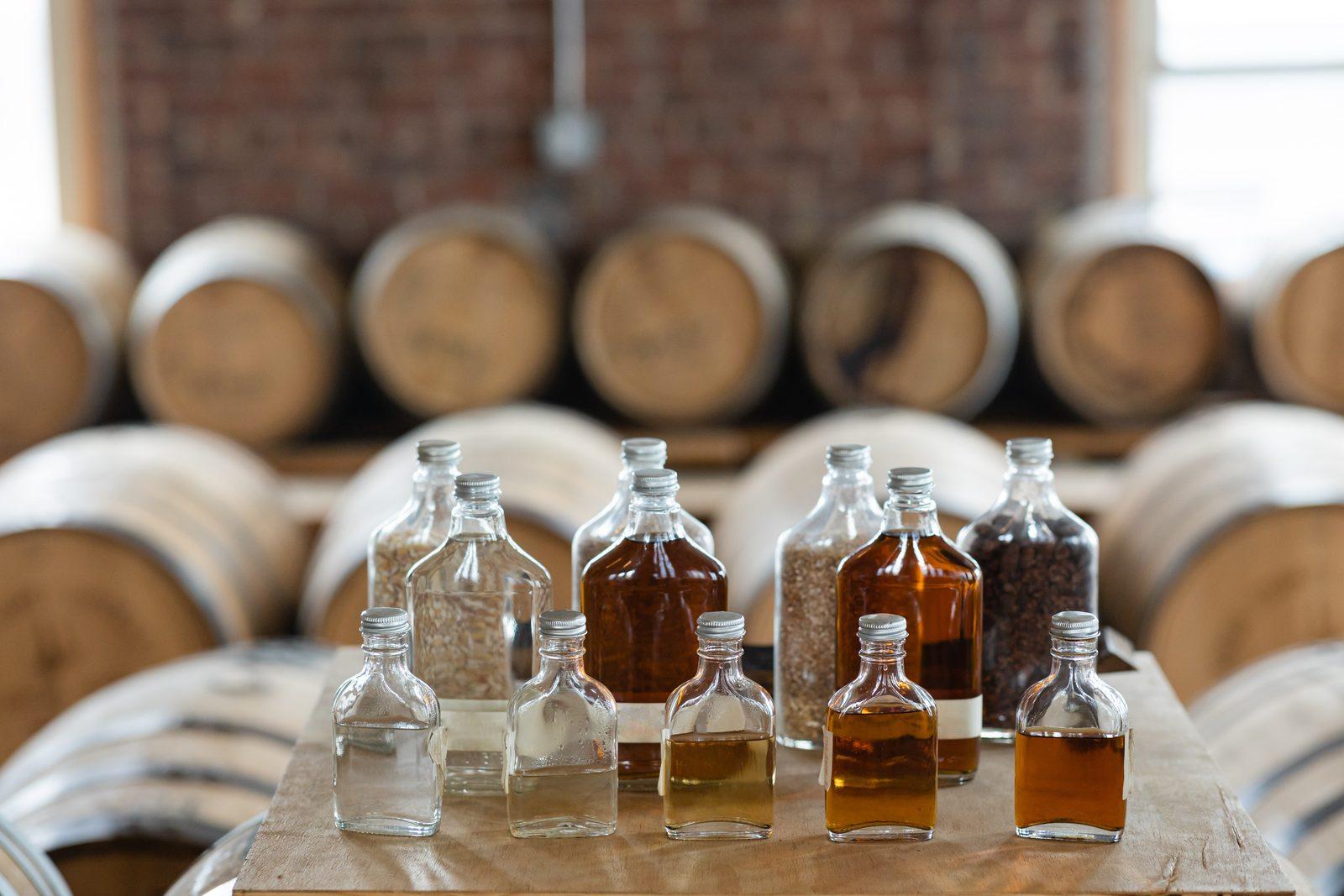
Sherry casks were common in the Scotch whisky industry long before The Macallan made them famous.
Throughout the nineteenth century, empty sherry butts were among the most abundant and affordable casks available in Britain. Sherry was one of the most widely consumed fortified wines in the country, and the trade generated a constant supply of used casks that distillers purchased cheaply and filled with new spirit. Maturation in sherry-influenced wood was not a deliberate flavour strategy. It was a practical and economic convenience.
What The Macallan did was something categorically different.
From the mid-twentieth century, The Macallan began moving away from opportunistic cask sourcing toward a systematic, defined programme of sherry oak procurement unlike anything the industry had seen. Rather than purchasing whatever used sherry casks were available on the open market, The Macallan established direct relationships with cooperages in Jerez, the sherry-producing region of southern Spain. They commissioned new oak casks to be built to their specification, filled with oloroso sherry and left to season for a defined period, absorbing the wine compounds into the wood fibres before being emptied, shipped to Scotland and filled with Macallan new make spirit.
The distinction matters enormously and is worth understanding precisely.
A cask purchased opportunistically on the open market carries whatever residual character it happens to contain, variable in quality, in wine type, in wood age and in previous use. A cask commissioned directly from a Jerez cooperage, built to specification and seasoned deliberately, carries a consistent, controlled set of compounds that the distiller has chosen in advance. The Macallan was not reacting to what the cask gave them. They were specifying what the cask would give them before it ever left Spain.
This approach transformed the cask from a container into an ingredient, as deliberately chosen and as precisely specified as the barley, the water or the yeast.
The results produced a flavour profile, rich dried fruit, dark chocolate, Christmas spice and deep amber colour, that became not merely a house style but a global reference point. When tasters, collectors and critics around the world reach for a benchmark against which to measure sherry-influenced Scotch whisky, they reach for The Macallan. That position was not granted. It was earned through decades of consistent application of a philosophy that no other distillery had pursued with the same rigour or commitment.
That reputation accumulated into something rare in any luxury category: irreplaceable collector demand tied directly to provenance and consistency.
In October 2023, a bottle of The Macallan 1926, part of a label series of which only 12 bottles were produced, sold for £2.1m at Sotheby’s, the highest price ever achieved for a single bottle of whisky at that time. That figure represents more than the liquid inside the bottle. It represents the compounded value of a philosophy applied without compromise across generations.
The Macallan did not stumble into that position.
It was built, one commissioned cask at a time, in a cooperage in Jerez, years before the whisky inside would ever be tasted.
Dalmunach: What the Next Chapter Looks Like
Not everything in Speyside belongs to history.
Dalmunach distillery, opened in 2015 by Chivas Brothers on the site of the former Imperial Distillery near Carron, represents something different: a purpose-built modern distillery designed from the ground up for the demands of twenty-first century production.
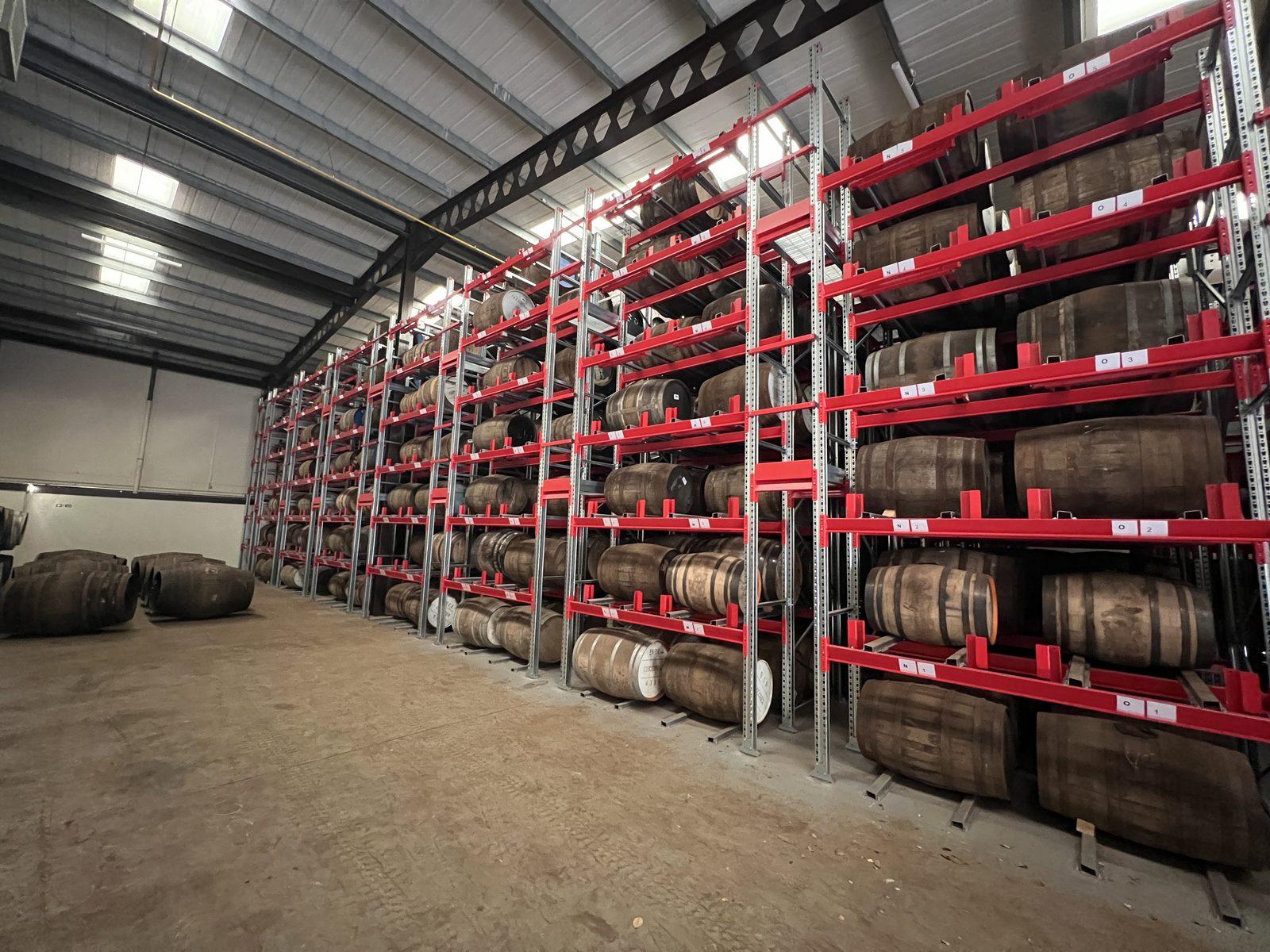
Where older Speyside distilleries evolved organically over generations, Dalmunach was engineered with precision. Its eight copper pot stills, arranged in a striking circular still house, are capable of producing around 10 million litres of pure alcohol per year, placing it among the highest-capacity malt distilleries in Scotland. Currently supplying spirit primarily for Chivas Brothers blends, its single malt story is still being written inside the warehouse.
What Dalmunach signals is that Speyside is not a region resting on its history. New investment, new infrastructure and new production capacity continue to flow in, because the market that older distilleries spent a century building is still growing.
Every era of Speyside began with a distillery that nobody had heard of yet. George Smith was unknown before 1824. William Grant was a former employee of another distillery before he built Glenfiddich with his own hands. The Macallan was a quiet producer supplying blenders before it became the most collected whisky name in the world. What each of them shared was not fame. It was a decision made at the right moment, backed by the right conviction, in a region whose conditions were uniquely suited to turning patience into something extraordinary. Dalmunach is at the beginning of that same journey. Where it ends, only the warehouse knows.
What These Distilleries Share
The Glenlivet brought legitimacy. Glenfiddich brought visibility. The Macallan brought prestige. Dalmunach represents what comes next.
What connects them across two centuries is a quality that is easy to overlook: each made a decision that went beyond simply producing whisky well. Each chose to build something that outlasted the generation that built it.
That instinct, to invest in quality, consistency and reputation over the long term, is precisely what made Speyside the region it became.
In Part 3, we will go deeper into the maturation process itself. How cask selection, warehouse conditions and time combine to produce whisky that collectors and connoisseurs pay attention to, and why some casks develop into something genuinely rare while others do not.
— Jason Chong
Director of Business Development, Whisky Cask Club


