
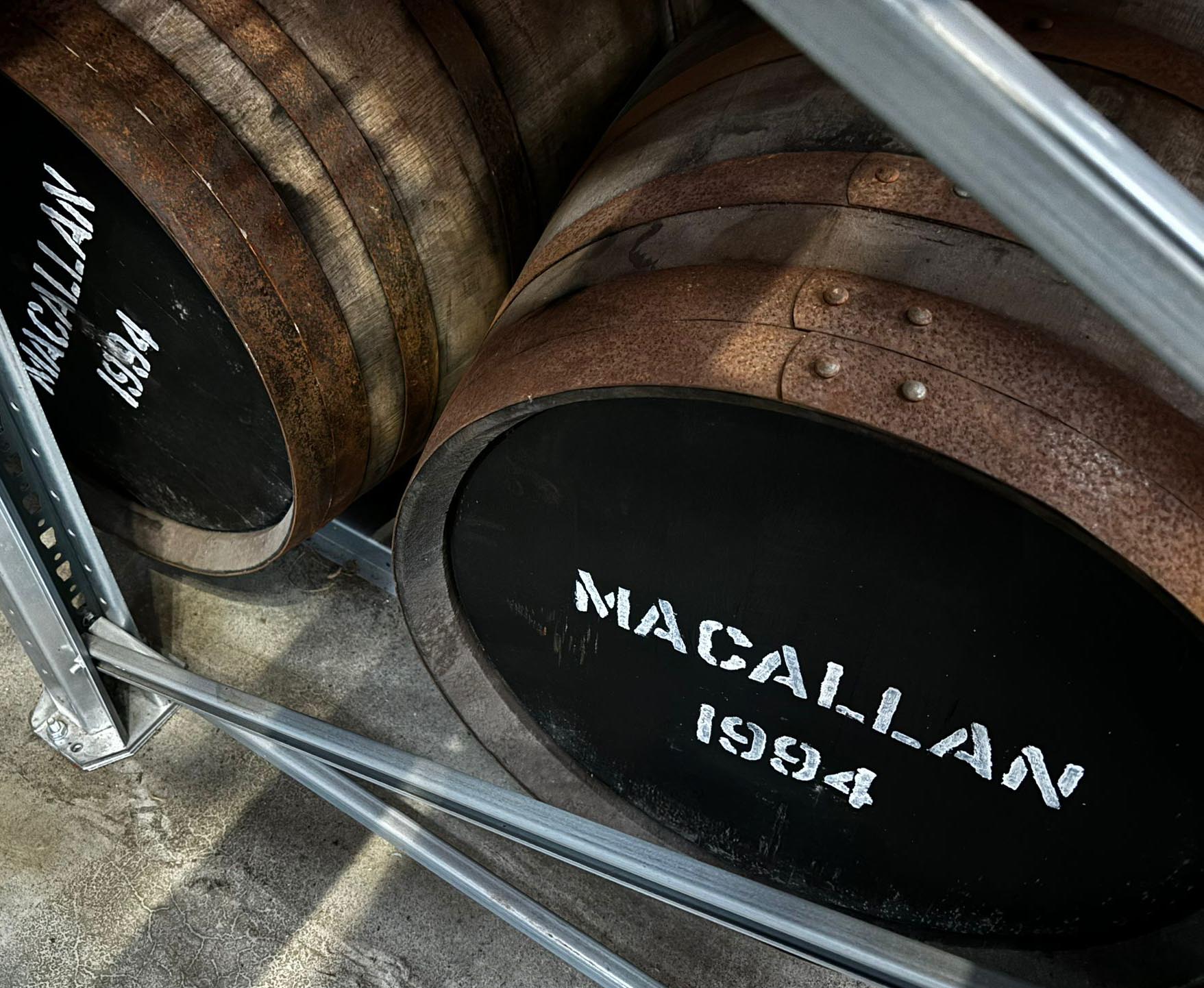
Speyside Part 3: Macallan, The Benchmark for Single Malt Investment
Part 3 of 12 — Speyside Series
One name keeps returning to the centre of the Speyside conversation.
Not because it is the oldest distillery in the region. Not because it produces the most whisky. But because over the course of a century, The Macallan made a series of decisions so consistent, so deliberate and so uncompromising that the market eventually had no choice but to treat it differently from everything else.
Understanding why The Macallan became the benchmark for single malt collecting is not simply a study in brand building. It is a study in what happens when quality decisions compound without interruption across generations.
Where Every Macallan Starts
Before a single cask is filled, before a single year of maturation begins, The Macallan’s character is already being shaped.
The distillery draws its water from springs on the Easter Elchies estate near Aberlour, on the southern bank of the River Spey. That estate, and the farmland surrounding it, has been associated with The Macallan’s production since the distillery’s founding in 1824. The connection between the land and the liquid is not incidental. It is structural.
The Macallan uses only the finest cut of new make spirit drawn from its stills, a practice it has maintained consistently throughout its history. Where many distilleries collect a broader cut to maximise yield, The Macallan narrows the collection window to capture only the purest, most refined heart of the run. What this means in practical terms is that a greater volume of raw distillate is discarded in favour of a smaller volume of higher quality spirit.
That decision costs more per litre of usable spirit. It also produces a new make with a particular character, clean, delicate and rich enough to carry decades of cask maturation without the wood overwhelming what the distillery put in.
Here is something few people outside the industry know: when The Macallan opened its striking new distillery building on the Easter Elchies estate in 2018, designed by the architects Rogers Stirk Harbour and Partners and built into the hillside above the original distillery, every single one of the new pot stills was commissioned to replicate the same shape and size as the original stills. Not approximately. Precisely.
The reason is specific. The Macallan’s stills are short and squat by Speyside standards. As a region, Speyside tends toward tall-necked stills that produce lighter, more delicate spirit through increased reflux. The Macallan’s shorter stills do the opposite deliberately. They allow more of the heavier, richer compounds to carry through into the distillate, producing a spirit with the depth and robustness required to interact meaningfully with wood across many decades of maturation. Those still dimensions are not equipment. They are intellectual property. Changing them would change the spirit, which would change the whisky, which would change everything the brand has spent a century building.
The Cask Programme: Where Philosophy Becomes Flavour
The Macallan works with a small number of cooperages in Jerez de la Frontera, the heartland of Spain’s sherry production in the Andalusian region of southern Spain. The relationship is not transactional. It is long-standing and specific.
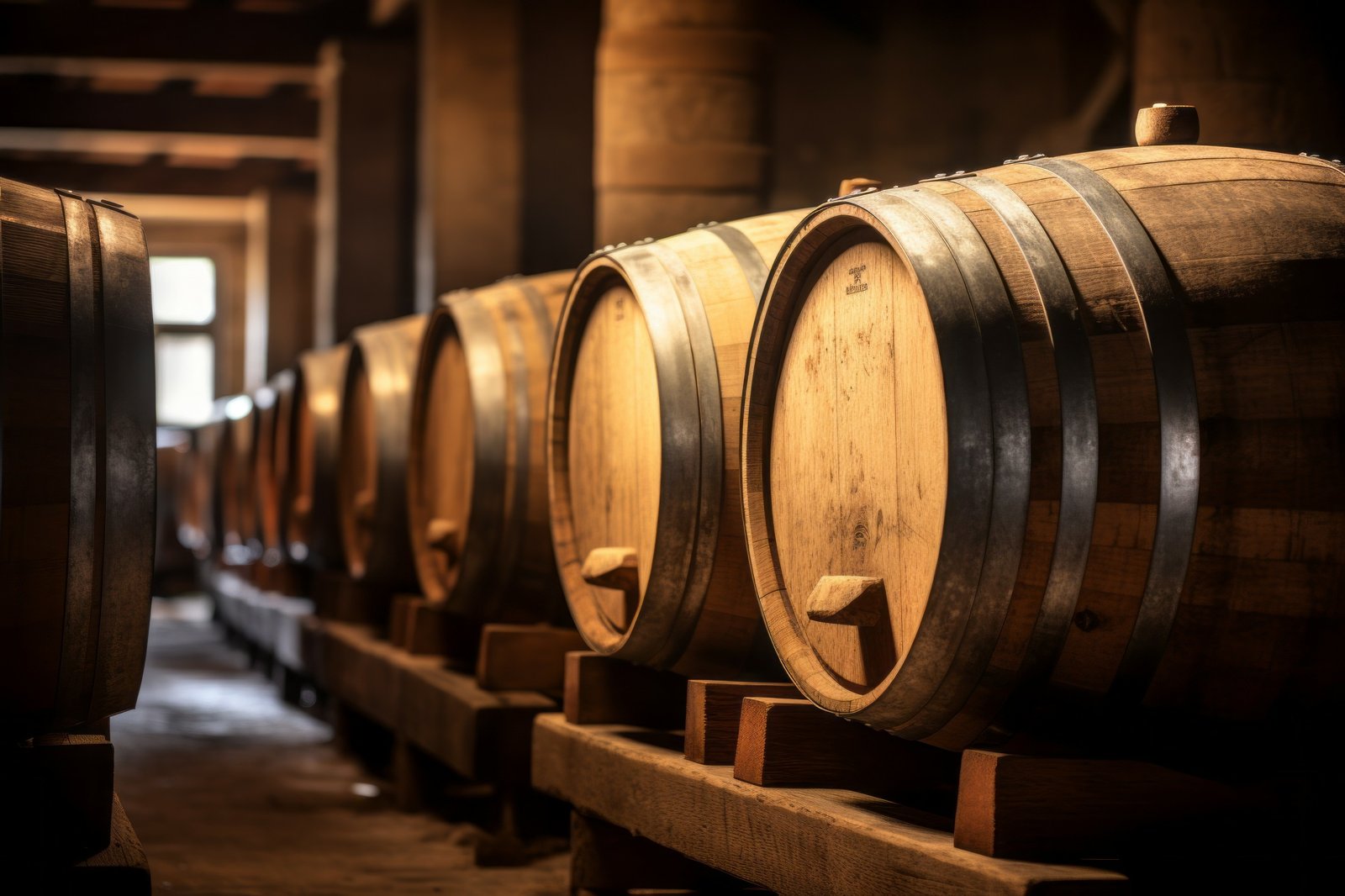
New oak is sourced primarily from forests in northern Spain, where the wood grows more slowly than American oak due to the cooler climate. Slower growth produces denser, tighter-grained wood with a different compound profile. European oak contains higher levels of tannins and ellagic acid than American white oak. When spirit interacts with European oak, the result is a deeper, darker flavour profile: dried fruit, dark chocolate, leather and a characteristic richness that American oak rarely achieves alone.
Now consider this: those Spanish oak forests are managed on a harvest cycle of approximately one hundred years. The oak tree that produced the cask currently holding a 2025 Macallan new make spirit was likely planted around 1925. The tree grew for a century before it was felled, seasoned, shaped into staves, assembled into a cask, filled with oloroso sherry in Jerez, seasoned for a defined period, emptied, shipped to Scotland and filled with whisky. Every bottle of Macallan represents not one investment of time but two: the century the tree spent growing and the decades the spirit spent maturing inside the wood it produced.
The Macallan also uses American oak sherry-seasoned casks alongside European oak, and the distinction between the two is worth understanding precisely.
American oak sherry casks deliver a lighter, sweeter profile. Vanilla, caramel and gentle orchard fruit dominate, with the sherry seasoning adding a layer of dried fruit and warmth without the intensity that European oak produces. These casks tend to allow the distillery character to come through more clearly, the spirit doing more of the work.
European oak sherry casks are the deeper, more assertive partner. The wood itself contributes more aggressively to colour and flavour, often producing a whisky with a darker amber hue and a flavour profile in which the wood and the spirit are genuinely inseparable.
The Macallan uses both, and the decision about which cask a particular parcel of spirit is placed into is made by the Master Whisky Maker based on the character of the new make and the intended expression. This is not guesswork. It is the application of accumulated institutional knowledge about how this specific spirit behaves in each wood type, knowledge built across generations of observation inside The Macallan’s warehouses.
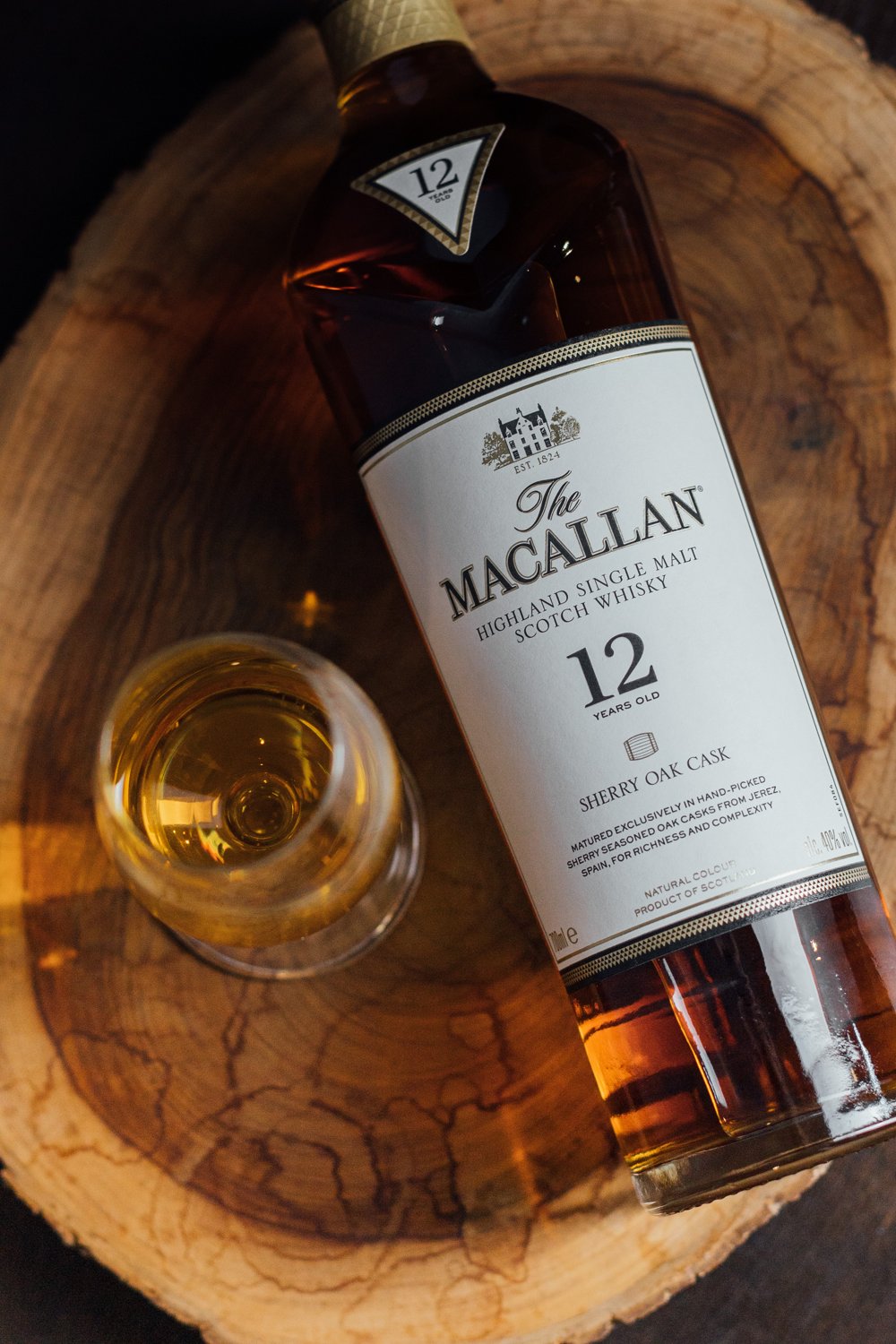
One more thing that separates The Macallan from the majority of premium producers: its colour is entirely natural. Many Scotch whiskies, including some at high price points, use a permitted additive known as E150a, caramel colouring, to standardise the appearance of the liquid across batches. The Macallan does not. Every shade of amber, gold or deep mahogany in the bottle is produced entirely by the cask, the wood type, the previous contents and the years of contact between spirit and oak. That commitment to natural colour is rarer than most consumers realise, and it means that the colour of a Macallan is itself information. It tells you something true about what the cask gave the whisky.
Time, Scarcity and What Actually Happens Inside a Cask
Most people understand that older whisky is rarer. Fewer understand why older whisky is genuinely different, and why that difference matters more in The Macallan’s case than in almost any other.
Speyside’s cool, temperate climate produces an angel’s share of approximately 1 to 2 percent annually. The angel’s share is the volume of spirit that evaporates through the cask walls each year, lost forever to the atmosphere. For a full sherry butt holding 500 litres of new make spirit, that means losing between 5 and 10 litres per year. Over 18 years, a cask might lose between 90 and 180 litres. Over 30 years, the loss compounds significantly. What remains is a smaller, more concentrated volume of spirit that has spent decades in sustained contact with oak compounds, sherry residue and the slow, irreversible chemistry of time.
But volume loss is only one dimension of what ageing does.
In the early years of maturation, typically the first five to eight years, the spirit is settling. The raw edges of the new make are softening. The most volatile, aggressive compounds are slowly dissipating. What the cask is doing during this period is primarily subtractive, removing harshness rather than building complexity.
From around eight to fifteen years, the relationship between spirit and wood becomes genuinely additive. Compounds from the oak, vanillins, lactones, tannins and the residual wine compounds from the sherry seasoning, begin to integrate with the spirit rather than simply coating it. Colour deepens. The palate broadens. The whisky starts to develop secondary and tertiary flavours, things that were not present in the new make and were not present at five years but have emerged through sustained chemical interaction over time.
Beyond fifteen years, and particularly beyond twenty, the whisky enters a phase that no production technique can replicate or accelerate. The integration of wood and spirit reaches a depth that is simply a function of elapsed time. The flavour profile becomes more complex, more unified and more singular. Each cask at this age is not simply old whisky. It is a unique, unrepeatable object.
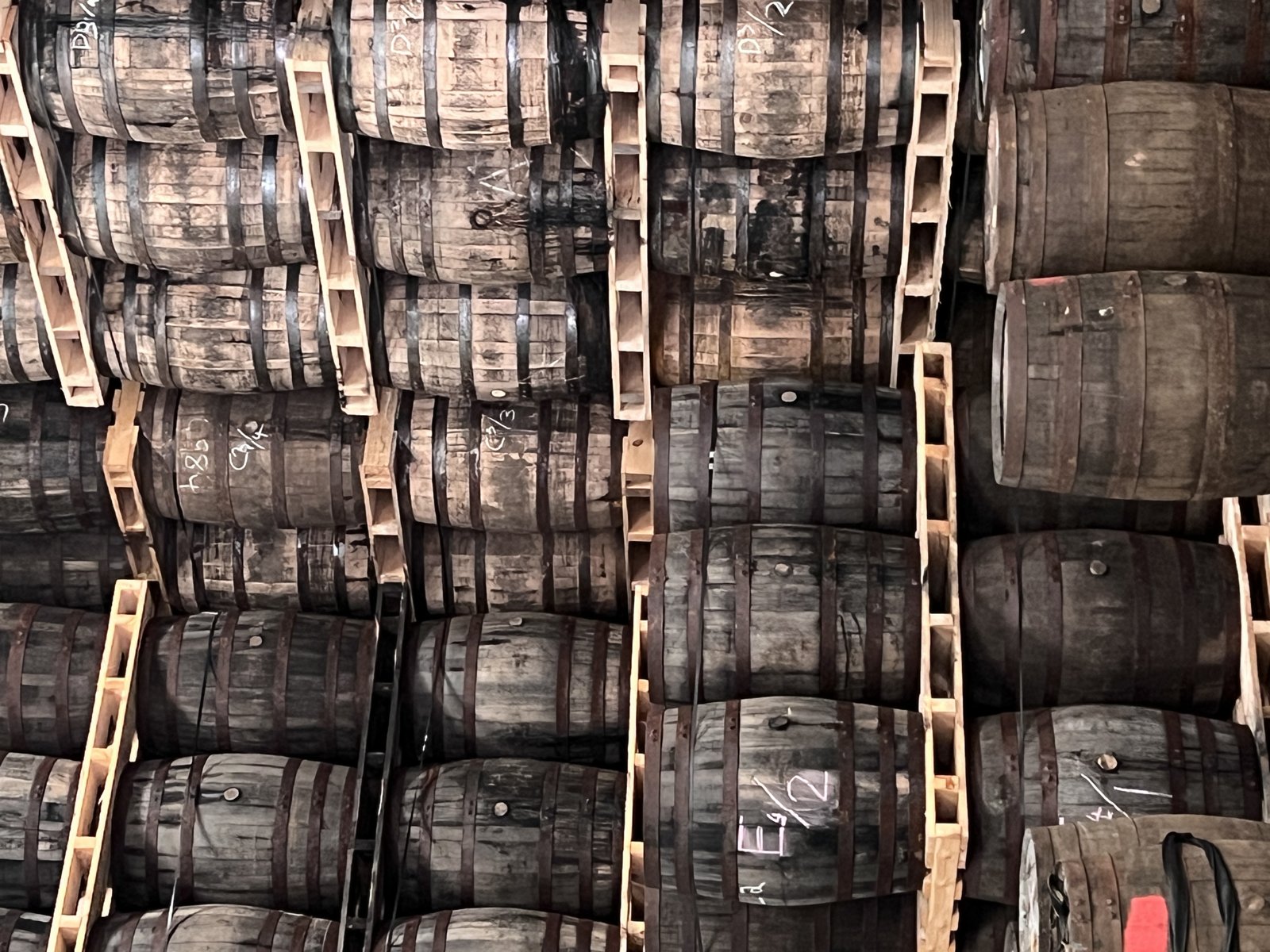
This is the foundation of genuine scarcity. Not scarcity manufactured through limited edition marketing. Scarcity produced by physics, chemistry and time operating inside a warehouse over decades. A 30 Year Old Macallan cannot be produced quickly. It cannot be restocked when it sells out. The casks that will become 30 Year Old expressions in 2045 were filled in 2015. Nothing produced today changes what is already ageing in those warehouses.
That irreversibility is what gives aged Macallan its particular position in the collector market.
The Cask That Almost Never Existed
In 1926, a single cask was filled at The Macallan distillery and placed into the warehouse. It sat there for sixty years.
There was no guarantee it would ever be released as a single malt expression. For most of its life in the warehouse, that cask’s most likely destination was a blend. It was only through the personal conviction of a small number of people inside the distillery, who recognised that what was developing inside cask number 263 was too singular to disappear into a blend, that the decision was made to bottle it independently.
In 1986, after six decades of maturation, The Macallan 1926 was bottled in extremely limited quantities. Different label versions were commissioned from artists, including the pop artist Peter Blake, best known for co-designing the cover of The Beatles’ Sgt. Pepper’s Lonely Hearts Club Band album in 1967, and the Italian artist Valerio Adami. Each label series comprised only 12 bottles.
Some expressions in The Macallan’s luxury tier were released in hand-crafted Lalique crystal decanters, collaborations with the French crystal house whose craftsmanship and rarity added a dimension of value entirely independent of the whisky they contained. The bottle and the liquid became inseparable parts of a single collectible object, each lending significance to the other.
In October 2023, a Peter Blake label bottle of The Macallan 1926 sold at Sotheby’s in London for £2.1m, the highest price ever achieved for a single bottle of whisky at auction. But the more instructive story is not the headline number. It is the trajectory. A bottle that sold for tens of thousands of pounds in the 1990s sold for hundreds of thousands in the 2000s and millions in the 2020s. The liquid inside did not change. What changed was the accumulated weight of the distillery’s reputation, the shrinking supply of bottles remaining in circulation and the growing global pool of collectors with both the means and the motivation to own something genuinely irreplaceable.
The Fine and Rare series, which encompasses older vintage expressions bottled at natural cask strength, tells a similar story across a broader range of years and price points. Expressions from the 1940s, 1950s and 1960s trade regularly at auction at prices that reflect not simply age but provenance, condition and the identity of the distillery whose name appears on the label.
What the auction record confirms is something the production story and the cask programme already suggest: The Macallan’s value is not a function of marketing alone. It is the market’s recognition of genuine scarcity, proven quality and a consistency of philosophy that no amount of capital can simply recreate from scratch.
A new distillery can be built. A new cask programme can be started. But a 40 Year Old Macallan filled in 1985 cannot be manufactured in 2025. It can only be waited for, and the waiting ended decades ago.
What This Means Beyond the Bottle
The Macallan is the clearest example in the Scotch whisky world of a principle that applies far beyond a single distillery or a single bottle.
The principle is this: value in whisky, genuine, sustained, compounding value, does not come from hype or scarcity manufactured after the fact. It comes from quality decisions made consistently at every stage of production, repeated without compromise across generations and recognised eventually by a global market that has had enough time to verify the evidence.
That principle, patient, quality-driven decisions compounding into something the market cannot ignore or replicate, does not stop at the bottle.
It applies equally to the cask. To the warehouse. To the spirit still ageing inside wood that was commissioned in Spain, filled in Scotland and left to become something neither the distiller nor the investor can fully predict, only patiently allow.
That is the conversation this series has been building toward.
— Jason Chong
Director of Business Development, Whisky Cask Club


